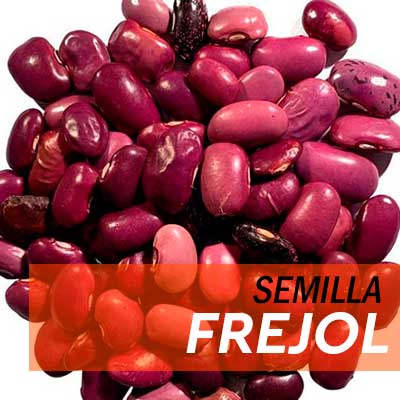
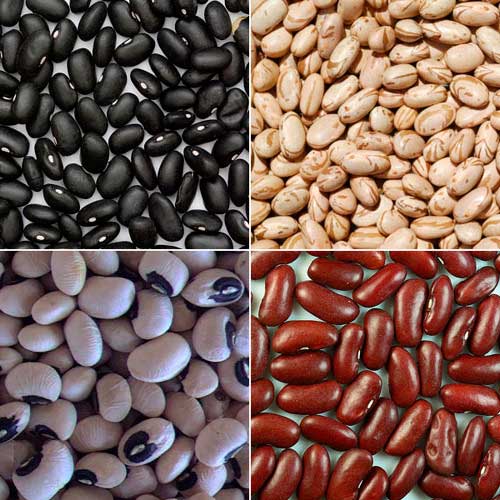
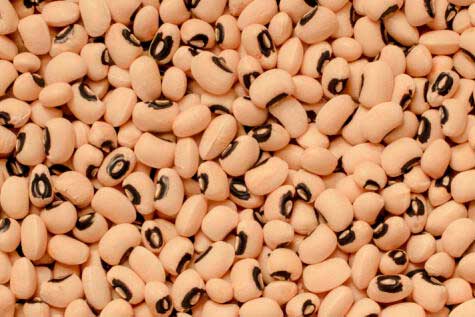
Phaseolus vulgaris is the best-known species of the Phaseolus genus in the Fabaceae family. Its seeds and, by extension, the plant itself, receive various names depending on the region; Among the most common are: bean, kidney bean, kidney bean, beans, beans, etc.
Numerous varieties are grown for consumption of their green pods or seeds, fresh or dried.
Description of the Product
Description
It is a herbaceous plant that presents its legume in various sizes and colors. It is native to Central America and South America; annual flowering, climbing, with a pubescent or glabrescent stem when it reaches adulthood.
Denominations
The species, both its green pod-shaped fruits and seeds, have a wide variety of names.
In Mexico, Central America (Guatemala, Honduras, El Salvador, Nicaragua, Costa Rica), Cuba and Puerto Rico, the plant is known as "bean plant", the pod is called "jote", from the Nahuatl exotl (except in Costa Rica, where it is called "vainica" and Cuba, where the dry bean is called pod and the green bean is called habichuela) and the seeds are called "beans" (a term that comes from the Latin phaseolus, and this from the Greek ph?sēlos). In Guatemala, Costa Rica and southern Mexico the typical or most preferred seed is black, in Honduras, El Salvador, Nicaragua and Puerto Rico the preferred one is red.
Also in Mexico the white variety is called "alubias", which is actually consumed very little, while the "bayo bean", the brown variety and the "flor de mayo" are the most consumed in the center and north of the country. country, while in the south they prefer the "black bean".
In Honduras they are also known as "balas" and "balines", hence the name baleada for the wheat tortilla and fried beans.
In Costa Rica, a variety of large beans are known as "cubaces", and the bean flowers are called "purisco", a word from which the name of the canton of Puriscal comes.
In Panama, the large black or red grains are called "porotos" and the rest of the varieties are called "beans."
In most of the Caribbean, as well as in Andalusia (Spain), they are called "habichuelas" (diminutive of haba, a name that comes from the Latin faba), but do not confuse the term "haba" or "habichuela" with the "beans" from the Spanish Mediterranean arc, which refers to another taxon (Vicia faba).
In Cuba, Panama, Puerto Rico, the Canary Islands and Andalusia, the green pods of this plant are called beans.
South America
In Argentina, Bolivia, Chile, Paraguay and Uruguay, it is called "poroto" (a term that comes from Quechua Purutu). In Paraguay, the Guaran? name "kumanda" and, pejoratively, "saporo" are also used. The pod is called "chaucha" in Argentina, Paraguay and Uruguay; and "vaina" or "capi" in Chile.
In Colombia it is known as "fr?jol" (note the grave or flat accentuation) and in some parts "frisol" (with acute accentuation) to the red or black beans, "blanquillo" or "cabecita negra" to the white ones, or "grano "In general, in the south of the country, especially in Cauca and Nari?o, it is called "pororto."
In Ecuador it is known under the name "fr?jol" (or "poroto" when referring only to the grain).
In Peru the plant is known as frejol, and the seeds as "frijoles" or "frejoles" and in the southern regions of the coast and mountains it is called "poroto".
In Venezuela, beans of the same type of black, white or red color are called "caraota" (black, white and red beans). The most preferred or typical seed is the black bean, and "beans" to the rest of the varieties, distinguishing each one by its origin or characteristic ("bay bean", "black peak bean" and "quinchoncho"), to the rest of the legumes. Similar ones are called by a different name, but they are considered "beans."
Properties
Beans have a high protein and fiber content, and are also an excellent source of minerals. It is also worth highlighting the high amount of folates it provides and the balanced content of other B vitamins except B12.
Beans and legumes are rich in plant protein, fiber, B vitamins, iron, folic acid, calcium, potassium, phosphorus and zinc. Most beans are also low in fat. Legumes are similar to meat in nutrients, but with lower levels of iron and no animal fats.
Beans are one of the most popular foods, they have a large set of varieties and are also known as haricots, frejoles, caraotas, habichuelas, alubias y porotos.
Regarding its nutritional properties, 100 grams provide 71 calories, as well as 4.07 grams of protein, 13.3 grams of carbohydrates, 3.6 grams of fiber and 0.29 grams of fat.
In short, they provide minerals such as potassium, sodium and phosphorus and vitamins A, C and B, which is why they have been part of the daily diet since pre-Hispanic times.
A study revealed by Consumer Reports found that eating beans four times a week reduces the risk of heart disease by 22 percent.
Another showed that bean eaters may be less likely to develop type 2 diabetes and may have better blood sugar control if they have the disease.